on
Two thousand years ago, a man was put to death for being kind, for speaking the truth, for refusing to bow before authority. We are certain that we know that man and what he stood for. We tell ourselves we stand on his side. We know his story and how it ends. We know who was right. But I sometimes wonder whether a greater tragedy followed his death.
In my childhood, during the weeks leading up to Easter, listening to the readings about Christ’s arrest, suffering, and crucifixion, I always felt indignation rise within me. Those passages never failed to fill me with a kind of righteous anger. I remember thinking, had I been there, I would have done something. I would have shouted down the crowd, confronted the soldiers, and refused to let an innocent man be murdered. Their blindness and cruelty disturbed me.
It would be years before I saw the irony in that reaction.
The people who condemned Christ did not think they were opposing God. They believed they were defending truth, preserving order, and protecting what was sacred. They were convinced they were right. As I grew older, I began to suspect that the deeper injustice was not that we let Christ be crucified, but that we reshaped his message into something safer, something agreeable. In many ways, we undermined what he represented, often while claiming to follow him.
As a child, I thought the tragedy was that we failed to recognise him. As an adult, I wonder whether we really know that man.
We believe his death was necessary. We rarely ask why it became necessary. He refused to sanctify religious authority simply because it claimed to speak for God. He preached a message his detractors could not allow. He spoke of a heaven in the here and now, a kingdom already at hand. They were the gatekeepers of a heaven deferred to the afterlife, where admittance was decided by their God. Christ rendered their conception of God superfluous. In doing so, he undermined their power.
They murdered him and then proceeded to destroy his teachings. The rebellion was swiftly put down, and the religious authorities went to work proving that he had not, in fact, rebelled. And, fortunately for them, the Jews had a history of reform driven from outside the religious establishment by the prophets. So they placed Christ at the end of that line. This, they said, was all preordained.
But those words from Matthew 9:16–17, ‘No one puts a piece of unshrunk cloth on an old garment; for the patch would tear away from the garment, and a worse hole is made. Neither do people put new wine into old wineskins, or else the skins would burst, and the wine be spilled, and the skins ruined. No, they put new wine into fresh wineskins, and both are preserved’, do they not read like a condemnation of attempts to contain Christ’s message within old doctrines? What Christ represented was a rupture with the old, not reform.
We are told that the parables of the Good Samaritan and of the rich man and Lazarus were aimed at individuals who failed to acknowledge the suffering of their fellow men. But what if they were never about individual failure? What if they were indictments of every kind of religion that steps over the wounded to attend to a God who, by its own admission, wants for nothing?
To Christ, the suffering multitude mattered more than the preservation of any ritual or tradition. But what have we, his followers, created for ourselves? The little we do, we deem sufficient, and the rest we consign to God. We busy ourselves safeguarding hierarchies and theological contrivances while the wounded remain at the gates.
Many of us are unclear about what Christ set out to accomplish. To those of us who want to believe he was here to set things right between God and man and to ensure that this God continues to be worshipped, his teachings and parables can appear incidental. They can seem little more than embellishments, minor additions meant to keep us intrigued and interested, rather than the substance of what he came to announce. The root of this confusion lies in our inability to accept that Christ spoke of a radically different God, a kind and attentive father, not a distant and punitive judge. He pointed not merely to a different vision of God, but to a different God altogether. He pointed to consciousness itself. And that is why he had to die.
I know that what I have said, and what follows, may unsettle many of you. I ask only that you hear me out.
Christ’s teachings were deliberately misinterpreted so that we would lose sight of his larger mission. He was here to set things right between man and man, and that objective, once realised, would give birth to the heaven of which he spoke. His teachings were meant to lead us to the wisdom that brings compassion and kindness. Yet, some of us decided that we must continue worshipping imaginary beings, for a heaven in the afterlife mattered more.
His teachings were meant to free us. A select few who held power distorted them, shaping them to serve their own ends. The parable of the sower, for instance, is said to illustrate what happens to God’s words: who heeds them and survives, and who perishes. But is that a useful interpretation? Is that the best the Gospel authors could offer?
The parable illustrates our inner reality. It explains how our lives unfold. The new must struggle against what already exists. Failure and success depend on what we carry within, on what already occupies that inner ground. Some things, accordingly, must be cared for if they are to flourish. We must be mindful of the world in which we operate and of that from which it arises. We need that connection to our consciousness.
The different states of the ground may represent the different circumstances under which we must operate. They may all exist within the individual.
We all inhabit different roles: parent, child, sibling, spouse, colleague, friend, and so on. We continually shift between them. They arise, and they perish. They succeed, and they fail. What ensures continuity? Christ is pointing to the deeper ground, our consciousness, the backdrop against which all these roles unfold. Only when we understand that do our struggles begin to make sense. We are the wheat germ he spoke of, the seed that must traverse the distance to the ground, know what it arose from, and merge itself with it. Only then can we find rest and dream of an abundant harvest.
But instead of helping us connect to something real, we were kept busy with rituals, beliefs, and the promise of a distant heaven. Why? Because some of us could not imagine a world in which what they already held to be true had no place.
Christ wanted a heaven here. The powers that be could not allow that. The empire they built on fear and ignorance would collapse. The equations of power do not admit a population capable of thinking for itself. Their version of reality insisted on a hierarchy: a chosen few immediately beneath God and the rest arrayed below them, with heaven reserved for the afterlife. You lived by a set of commandments and were rewarded later, not now.
So what did we end up with? The very structures Christ rose against, repackaged and clothed in pious rhetoric, are presented to us as salvation.
I understand that to some of you, the Christ I have spoken of is an enemy. He has poked holes in what you once held sacred and cast doubt where there was certainty.
But this is not surprising. This has always been the pattern. Those who had followed him through Galilee and Jerusalem wanted something in return. They carried expectations, ambitions, and private hopes. And when those were thwarted, they left him alone on that cross. He finds himself there again and again, abandoned whenever what he was seems to refute what we demand of him.
But he was here for us. He sought no worshippers. He only wanted us to listen. Christ sought ‘catchers of men’. He wanted those prepared to lay down their lives for truth. If you are to fight for something, you must first take responsibility for your own life. Only then can you aid another or serve an ideology. That cannot happen when you are held back by fear and confusion. Christ sought to remedy that, but we ignored his teachings. We diluted them. Wherever it became confrontational, we built in exits.
Would you give this man a chance? Do you not see that what they have erected in place of the heaven he spoke of has failed? Do you not see the misery around you?
Do you not realise that the world we have built for ourselves must ignore the suffering of millions in order to keep moving forward? Do you see an end to strife and war?
Do you see your religion standing aloof, uncommitted, refusing to come to the aid of the helpless, pretending they do not exist? Do you see your religion distancing itself from any responsibility for these people’s misery?
And if you can find the courage not to turn your face away from this troubling reality, then the question is not whether Christ failed us, but whether we failed him.
Make no mistake, we failed him. We failed him by allowing ourselves to be swayed by emotional appeals, empty promises, and the comfort of easy answers. We failed him when we chose blindness, when we decided it was safer to be led than to see for ourselves. We entrusted ourselves to leaders who were neither kind nor compassionate, and whose only prescription for our suffering was submission and prostration before an indifferent, unresponsive God.
Christ, in contrast, had something real to offer. He pointed to consciousness. He taught us to search within, to understand the source from which life itself flows. Our problems are rooted in that ground, and it is there that they must be addressed.
We silenced him. But he must be heard. The rebellion he began must be kept alive. It is our turn to take a stand. We must decide which Christ is true. We must bear witness to what is true and useful. If we do not, the religion that has claimed him will continue pretending for another two thousand years that Christ’s death was merely the price of the salvation it offers.
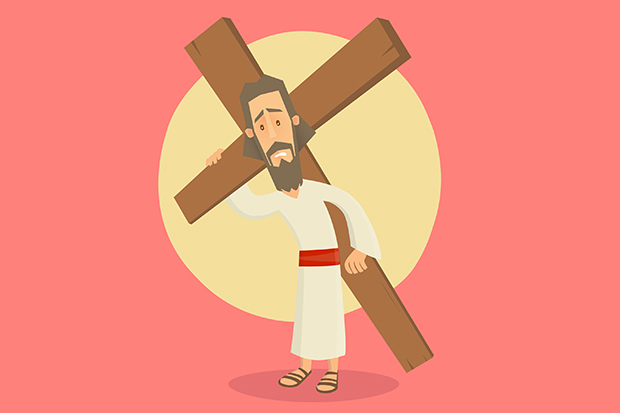
They say he meekly chose the cross. They reduce Gethsemane to weary resignation. Yet, on the cross, he forgave his enemies. If they were merely instruments in his Father’s plan, what was there to forgive? The answer was never spectacle or overwrought symbolism. This was no sacrifice to appease a deity. It was a calculated execution. They portray his helplessness on the cross as assent to the very lies he came to undo. If we cannot see this, we betray him.
It is time to bring our light out from under the bushel. That light, our consciousness, must never be concealed. It does not belong beneath misbegotten authority or misplaced certainty. It belongs in the open. It is what lends reality to the world around us. It is now our turn, as followers of Christ, to ask uncomfortable questions, first of ourselves and then of the wider world we have helped shape.
Christ pointed inward, to the breath that sustains us, to the will that moves us, to the source from which they both borrow. He showed us the path to freedom – a path that leads through consciousness, a consciousness that grows only when we struggle towards what is right and life-affirming. We were told to wait for signs and portents. None is needed. The sign is already here, in the fact of our own consciousness. If we would honour him, we must walk in its light.